Monday, September 19, 2011
Juan Cardenas Records for The US Army
New York Theater actor Juan Cardenas was in the studio last week to record voice over spots for the US Army. Produced by Bar1NYC, the session included an ISDN connection to NY. As usual, the session went off without a hitch. Juan recorded the spot in both English and Spanish and we used the regular mic/pre configuration for v/o in Studio C, a Neuman U87 fronted by a Focusrite Red 7 with slight compression. The nature of the spot was fairly laid-back, with little to no dynamic in the line read. Juan will be in San Diego for a few months as a cast member in an upcoming production at the Old Globe Theater in Balboa Park.
(Juan Cardenas pictured, above, and with Engineer Mark Kirchner)
Thursday, August 25, 2011
Robin Leach Visits Studio West
![]() |
| L-R: Intern Alfonso Wong, Engineer Mark Kirchner, Mr. Robin Leach, Studio Manager Jesse Maxson |

He's unmistakably Mr. "Lifestyles of the Rich and Famous"! Yesterday, Robin Leach stopped in from a La Jolla vacation to record VO pick-up lines for a set of commercials produced by Shiny Objects Marketing just up the road in Orange, California. Robin was on a tight schedule and we needed to be in and out to keep his day on track. We connected via phone patch with the producer in Orange County and the session went off without a hitch. Robin has obviously been doing this for years - he was an absolute delight to work with!
Friday, August 19, 2011
Studio West Strikes Hard with Captain America!
Studio West has completed the soundtrack and mix to Sega/Marvel's game trailer for Captain America!
by Mark Kirchner
Brought in again by our favorite San Diego-based animation studio, Pendulum Studios, our own Gary Miranda completed the audio for this 6-week game trailer project in both Stereo and 5.1 Surround Sound.
Now that we've done a couple projects like this with Pendulum, we wanted give you a little idea of what goes on behind the scenes with them while working on a project of this caliber. We're only touching on a fraction of what really happens in the Pendulum workflow but it's such an interesting process, we thought we'd try and share a little of it with you.
Pendulum is a relatively small company for the amount and quality of work they produce (make sure you check out their site for other examples of their fantastic work!). When in production on the video game trailers for Captain America and Thor, Pendulum Studios had 16-17 people at a time working on the project in various stages of completion. Overall, there were about 25 animators and visual artists that worked on the two projects. With a team of this size, the visual elements for each trailer took about 70 days to complete, or about two and half months for each 2:30 spot.
Towards the beginning of the two and a half month project, Studio West would receive a rough 90% timed animatic of the trailer. Location dialog from the motion capture stage was usually included. Animators no longer draw every frame from scratch; they suit-up actors in those cool dotted suits we've all scene on the cover of computer magazines, and let computers connected to video cameras translate most of the actors movement captured in the Motion Capture (MoCap) Stage to computer based wireframe-type mannequins that eventually become the final animated characters.
From the rough animatics provided by Pendulum via FTP, we generally produce 70% of the sound design that is used in the trailers. The remaining 30% is produced in the last 3-4 days prior to delivery. Iron Man 2, Thor and Captain America were all produced in 5.1 Surround Sound from the get-go, and there's a lot of information that needs to be kept track of when building sound design for surround. Gary and Brandon could probably write volumes on the intricacies of their routing and bussing schemes!
For the Iron Man 2 trailer, Gary produced all the music for the trailer from scratch. In the case of Thor and Captain America, we received pre-edited music beds directly from Pendulum created from actual in-game music cues. For Captain America, Pendulum timed much of the animation to the music, so it was important that they have the music bed completed very early on to support all the action in the spot. It's possible that the music bed was the first thing edited together for the Captain America project. Gary did fair amount of "tightening" of their edits, but in the end, the timing remained identical to the supplied bed, so losing sync was never an issue.
Once we got into a consistent workflow with Pendulum sending newly rendered movies every few days, we would send rough mixes over to them and receive audio notes back about once a week. In the days just prior to delivery, newly rendered footage and audio notes came to us every day, and sometimes several times in one day. Quite often, with newly rendered visuals, we'd want to take a completely different approach to the audio. This is not always easy to do when you're under the gun with less than 48-hours till delivery. Needless to say, things get a little stressful in those last two days.
![]() |
| L-R: Mike McCormick, Rob Taylor, Shay Goldenberg |
The gang at Pendulum is top-notch and we're glad they continue to call on us! Projects that Studio West has completed with Pendulum Studios include game trailers and in-game cinematic for Red Faction Guerilla, Singularity, Iron Man 2, Thor and now Captain America.
![]() |
| Gary Miranda in Studio B at Studio West |
Below are some questions I asked Gary about his recent work on the Captain America game trailer.
MK: What was different about the experience between Thor and Captain America?
GM: Captain America is so high action - everything is there in your face, and it needed to feel like it was in-your-face-happening. Thor was very ambient and dramatic and it almost made it harder to make less into more.
MK: Which one did you enjoy more, and why?
GM: I think I liked working on Captain America a little better. I really enjoyed putting together sounds of the soldiers getting CRUSHED! The impacts were just fun.
MK: What would you do differently on either one?
GM: I would probably mix them a little more dynamically. A little more breathing room (with the music really) on both just to have certain elements stand out that I know are there but most people don't.
MK: What's your favorite section of the Captain America spot for sound design?
GM: Really? I have to choose which one of my kids is the favorite? I guess my two favorite spots are the ground pound and the scorcher beams.
The ground pound (shield being slammed into the ground) was one of the first things I did when we received our first animatic. I knew exactly what I wanted for that, even before we had a decent render. That was the only thing that stayed pretty much the same from the start to final delivery.
The scorcher beams were a whole different beast. We received so many different versions of those beams. For some reason I just couldn't get exactly what was in my head out of Pro Tools. The final sounds were the result of a lot of hours playing around with different elements. There are so many subtleties and layers going there: library sounds, virtual instruments, Foley created sounds, warped sounds...a lot of tracks!
On a side note, the sound that makes me laugh every time is Bucky's gun. That is the most powerful 9mm ever! I wish mine sounded like that.
MK: How long did this project take compared to Thor?
GM: I actually had a little extra time for Captain America. From the first video, I had about 3 1/2 weeks. There were some times where I was waiting for new versions so I wasn't working full time at first. The last 2 weeks were full days just like Thor.
MK: How many tracks did you end up using on Captain America?
GM: The track total for Captain America was 98! Almost broke the hundred barrier. It wasn't unmanageable, though. Proper setup, track organizing, color coding and routing were essential in keeping everything where I wanted it.
Friday, August 12, 2011
Celebrating Our 40th Anniversary!
Forty years ago this July, Lee Caroll opened Studio West of San Diego. A few weeks ago Lee stopped by the studio for a visit. Needless to say, we think he was impressed by the studio's longevity, and proud to see that it is still so well respected in the audio industry!
![]() |
| Pictured left to right: Hunter Levy, Kellogg Boynton, Darrell Harvey, Caleb Keiter, Jesse Maxson, Gary Miranda, Lee Carroll, Peter Dyson, Marti Amado, Amy Dyson, Mark Kirchner, Amy Ziegelman |
Things have changed a lot since Lee opened the doors. The facility was originally located in the Kearney Mesa area and relocated in 1986 to Rancho Bernardo, where we're currently located. When Peter Dyson bought Studio West in 2004, he added an extra studio to the arsenal increasing the facility to three studios and two edit suites. In 2006 we added a couple of classrooms and opened TRAC - The Recording Arts Center, our Education and Training division, bringing Audio Engineering and Avid Pro Tools certifications to San Diego County. By January of 2012, we're expecting to offer a year-long Occupational Associates Degree in Recording Arts with over 30 different classes included in the program.
While Lee was visiting, George Varga from the San Diego Union Tribune dropped in to do a little interview about the milestone. Click here to read the article and find out a little more about the history of Studio West.
Celebration has continued and this past week Brad Perry of Good Morning San Diego stopped by to do a piece on the studio and listen in on a demo that was being recorded in Studio A. Click below to watch the video:
Thank you, San Diego - here's to the next 40 years!
Thursday, July 21, 2011
Vive y Viva
![]() |
| George Rivera, left, with Studio West engineer Mark Kirchner |
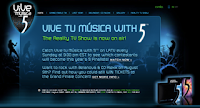
Local San Diego radio personality George Rivera was in Studio C earlier this week cutting voice tracks for 5 Gum's "Vive Tu Musica" campaign. Bravo Agency, located in Chicago, was responsible for writing and producing the spots and they were connected into the sessions via phone-patch so they could interact with George on direction. We connected via ISDN to Sound Slave, also located in Chicago, for the voice record as they were responsible for compiling the final radio and television edits. "The booth setup was pretty standard using a U87 and pop-filter on the front end, with the exception of a fairly heavy compression ratio on the Focusrite Red 7," reported session engineer Mark Kirchner. "In order to get the entire script read in the 25 seconds allocated, George had to hit the mic pretty hard resulting in lots of plosives. In all I think we did four individual sessions for the campaign. George was a blast to work with and we're already looking forward to next summer's contest!"
Meanwhile, over in Studio A, Viva Brother were recording voice-over cuts for Slacker Radio. They also performed a 3-song acoustic set to be included in their feature station on the internet radio service. (Watch Viva Brother's performance on Jimmy Kimmel Live here!)
Friday, July 8, 2011
Congratualtions!
We'd like to congratulate the following artists (and Studio West clients) on their 2011 San Diego Music Awards nominations:
Jordan Reimer - Best Acoustic
Echo Revolution, "Counterfeit Sunshine" - Best Pop Album
Tori Roze and the Hot Mess, "From the Hip" - Best Blues Album
Wayne Riker Quintet, "Penumbral Sky" - Best Jazz Album
Tribal Seeds - Best World Music
B-Side Players - Best World Music
Endoxi - Best Alternative
Astra Kelly, "Time Bomb" - Best Rock Album
Hyena, "We See You" - Best Alternative Album
My Elysian, "My Elysian" - Best Hard Rock Album
Genius of Soul, "A Project for the New American Century" - Best Jazz Album
Gregory Page, "My True Love" - Best Jazz Album
Peter Sprague, "Calling Me Home" - Best Jazz Album
Berkley Hart, "Crow" - Best Americana Album
Shawn Rohlf & The Buskers, "Tiny Xs" - Best Americana Album
Wednesday, July 6, 2011
Ida Maria Performs and Records in Studio A
Studio West Engineer and Intern Program Manager Hunter Levy was in A this week with Ida Maria as she recorded vocals and voiceover for Slacker Radio. Here's what he had to say about the gig:
During Ida Maria's visit in Studio A she and her guitarist, Stefan Tornby, recorded voiceover clips to be used as introductions to 50 of their favorite songs, which will be played on the Ida Maria Radio Station on Slacker Radio. After the clips were recorded, Ida and Stefan were kind enough to play a 3 song acoustic set before heading out to her show at The Casbah. The performance was recorded using one 414 mic on the acoustic guitar, one SM57A on Ida's Vocals, and one SM58 on Stefan's vocals. I chose dynamic mics for the vocals to reduce guitar bleed into the vocal mics. I placed the 414 at the 12th fret of the guitar to get the guitar sound I wanted. I'm happy with the result of the recording and during the performance became a new fan of Ida's music!
| (L - R): Hunter, Studio Manager Jesse Maxson, Ida Maria, Stefan Tornby |
Subscribe to:
Posts (Atom)


